.jpg)
Under the theme "Traditional Knowledge and Contemporary Ecological Practices," last week Prespa hosted the annual #PrespaNet Transboundary Summer School for Young Ecologists. The school was organized by the Macedonian Ecological Society in cooperation with the Society for the Protection of Prespa (Greece) and the Protection and Preservation of Natural Environment in Albania (PPNEA).
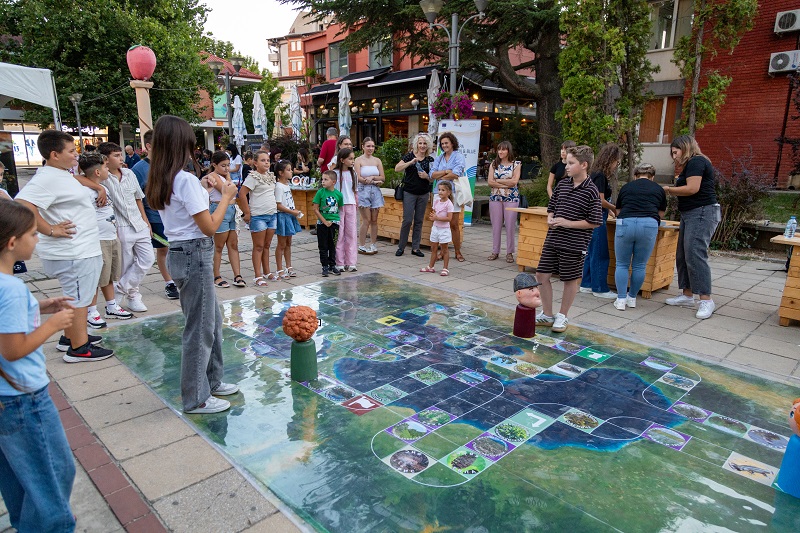
Over the course of five days, participants from the three countries sharing the Prespa Lakes basin took part in field research, expert lectures and interactive workshops, gaining first-hand insight into the natural and cultural values of the Prespa-Ohrid Transboundary Biosphere Reserve.
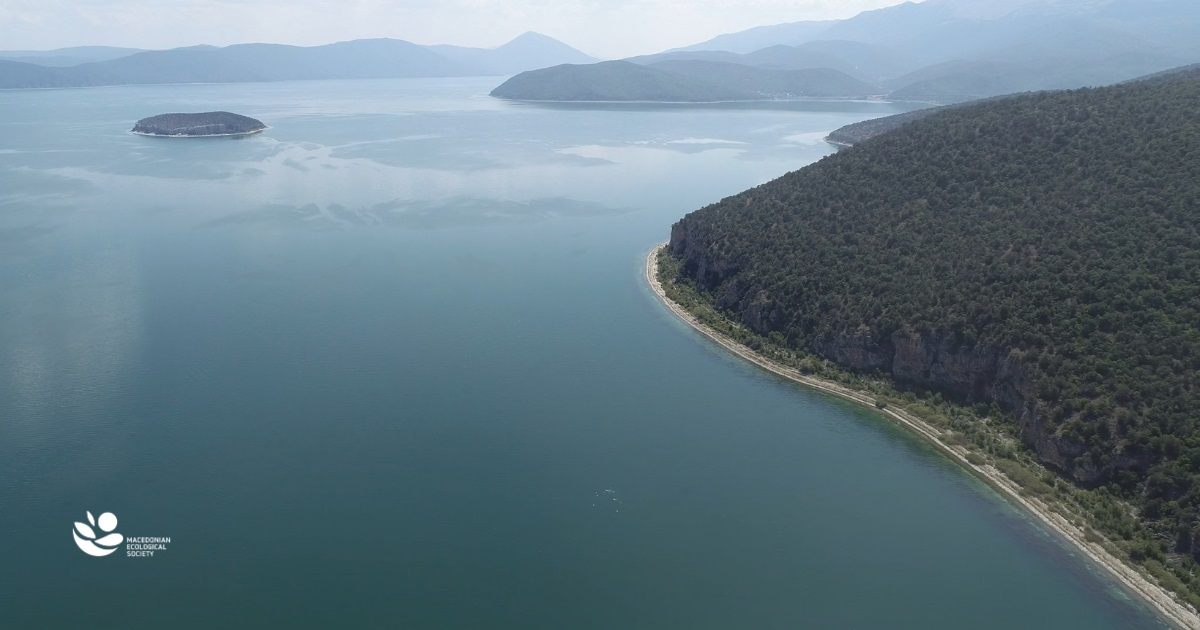
Following the introductory day and participant orientation, the programme continued with a visit to Galichica National Park and the springs of St. Naum, where the young ecologists discussed the myths and scientific realities surrounding the water flow between Prespa and Ohrid Lakes, as well as the impacts of climate change and human activities on the hydrology of this interconnected lake system.
.jpg)
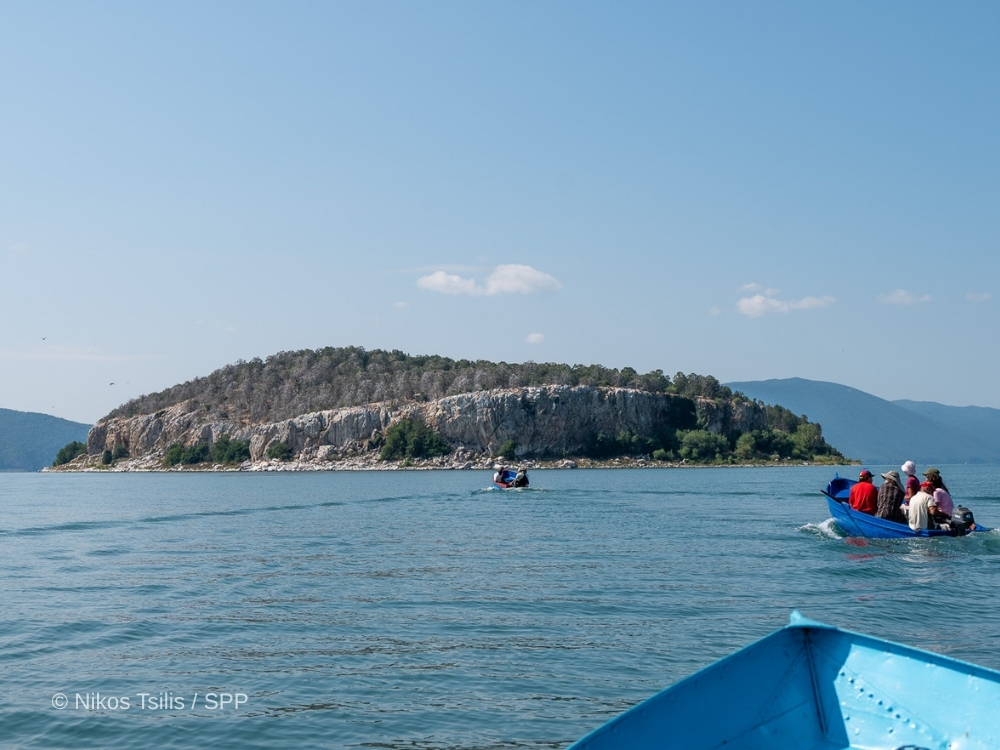
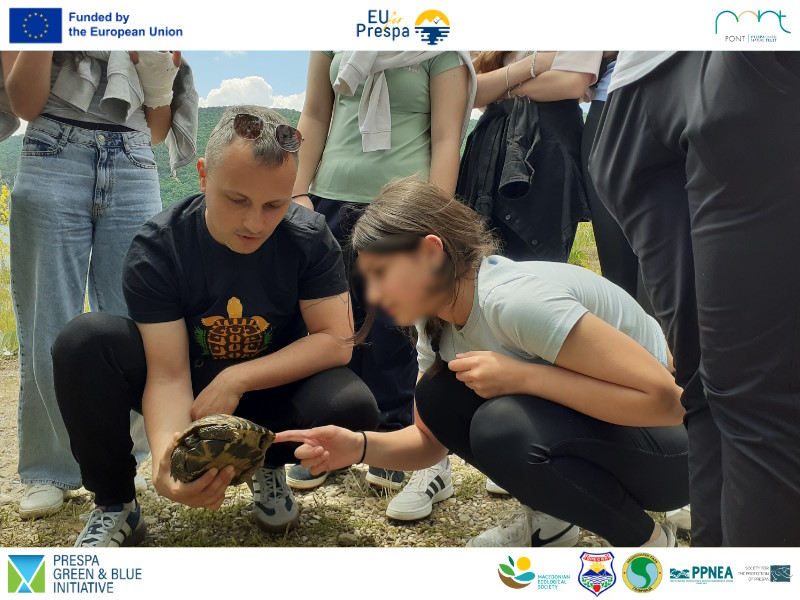
The highlight of the programme was the visit to Golem Grad Island, one of Prespa's most valuable natural and cultural treasures, internationally recognized for its exceptional biodiversity and fragile ecological balance. The afternoon workshop focused on methods for monitoring Hermann's tortoises on the island, processing field data and using these data for population assessments. The day concluded with a lecture exploring the inseparable links between the region's natural and cultural heritage.
.jpg)
.jpg)
.jpg)
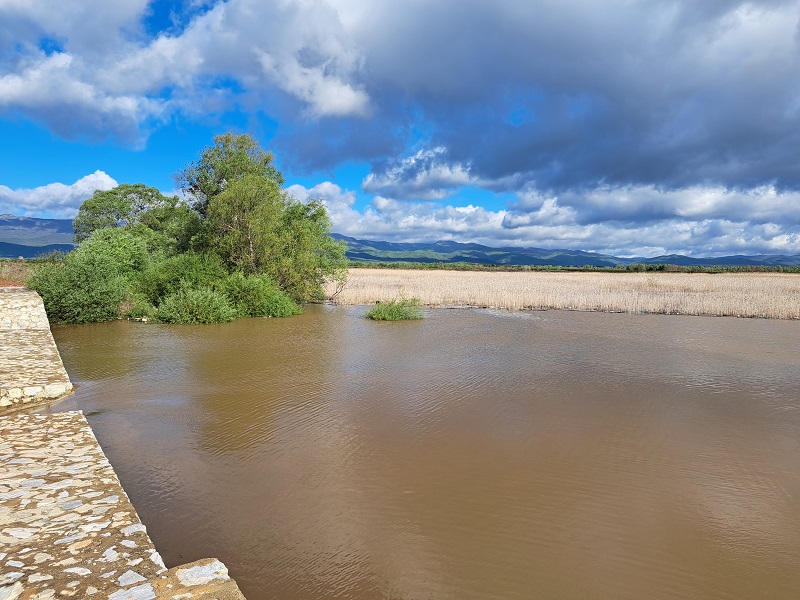
At Ezerani Nature Park, participants learned about both traditional and modern approaches to wetland management and discussed conservation challenges with park representatives. In the afternoon, they took part in a practical habitat mapping workshop using drone imagery collected during the field visit.
The Summer School concluded with a visit to the “Spirit of Prespa” farm in Carev Dvor, where participants learned about alternative and environmentally conscious forms of tourism developing in the region, with a particular focus on agritourism that combines Prespa's traditional cultural values with progressive agricultural practices.
.jpg)
.jpg)
.jpg)
Once again, the Transboundary Summer School provided a space where science, hands-on field experience and local knowledge complemented one another. Young ecologists gained new skills, practical experience and valuable professional connections that will contribute to the future conservation of Prespa. The School also reaffirmed the importance of transboundary cooperation in safeguarding this unique lake ecosystem, whose rich natural heritage can only be preserved through shared commitment and joint action.
.jpg)
The Transboundary Summer School in Prespa was organized as part of the project "PrespaNet III – Biodiversity Conservation in Transboundary Prespa," supported by Prespa Ohrid Nature Trust (PONT), the Aage V. Jensen Foundation, and EuroNatur.
![Call for Applications: Transboundary Summer School in Prespa [2026]](/media/blog_images/Summer_School_2026_-_horizontal_-_web_BfRHPwA.jpg)